Nuclear Quantum Effects in Interfacial Chemistry and Superconducting Materials
Ring-polymer and quantum-dynamical methods for light atoms, interfaces, and hydrogen-rich materials.
Why it matters
Light atoms such as hydrogen do not always behave like classical particles, especially at low temperature or in strongly anharmonic environments. Their quantum behaviour can affect interfacial chemistry, vibrational relaxation, diffusion, and the lattice dynamics that underpin superconductivity in hydrogen-rich materials.
What I’ve done
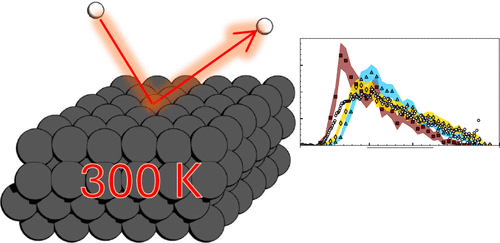
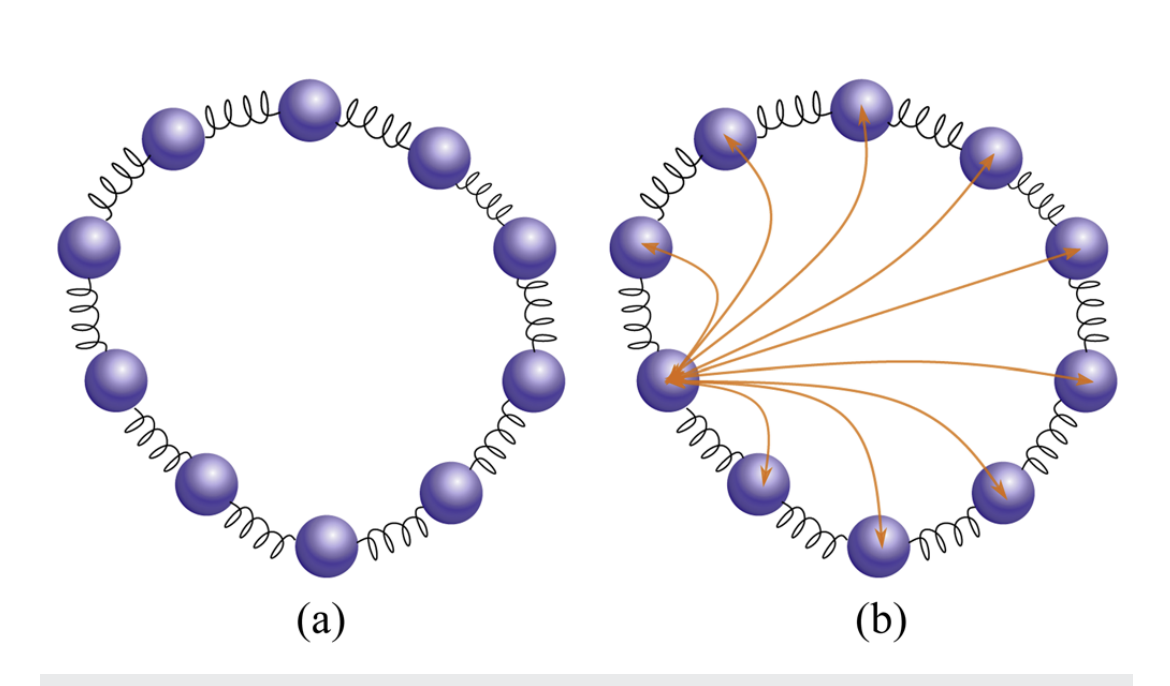
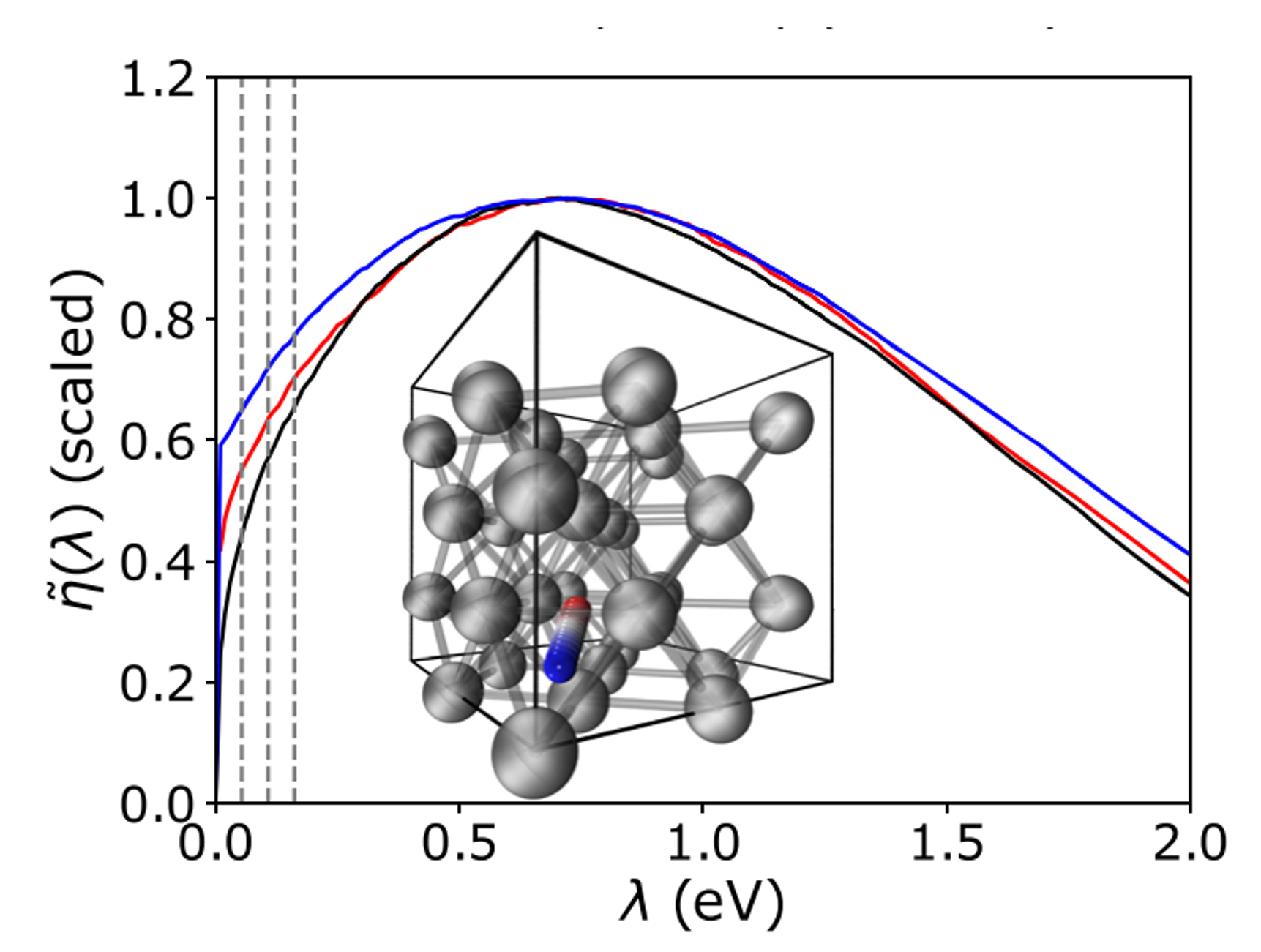
My earlier work with Yair Litman explored how nuclear quantum effects and electronic friction can be combined in instanton-based rate theory, providing a framework for dissipative quantum dynamics beyond purely classical motion. More recently, my work on room-temperature hydrogen scattering has highlighted where simple classical benchmarks are insufficient, motivating a more systematic treatment of quantum nuclei in surface dynamics.
What I aim to do in the future
In future I aim to develop and apply ring-polymer and related quantum-dynamical methods that capture the behaviour of light atoms at interfaces and in complex materials. A particular goal is to understand how nuclear quantum effects interact with electron-phonon coupling and nonadiabatic dynamics in systems ranging from surface chemistry to metallic hydrides and superconducting materials.
(Litman et al., 2022) (Litman et al., 2022) (Box et al., 2024)